Cloud FinOps: Reducing Infrastructure Sprawl at Scale
Actionable tactics for rightsizing container clusters, reserved instances, database pooling, and egress cost containment.

- Benchmark actual P95 CPU and memory utilization rather than relying on arbitrary developer resource requests.
- Offload read-heavy reporting queries to autoscaled read replicas to downsize expensive primary DB instances.
- Leverage edge CDN caching to slash cross-zone data transfer and egress network charges by over 70%.
- Institute continuous tagging audits so that every cloud dollar is mapped directly to a business cost center.
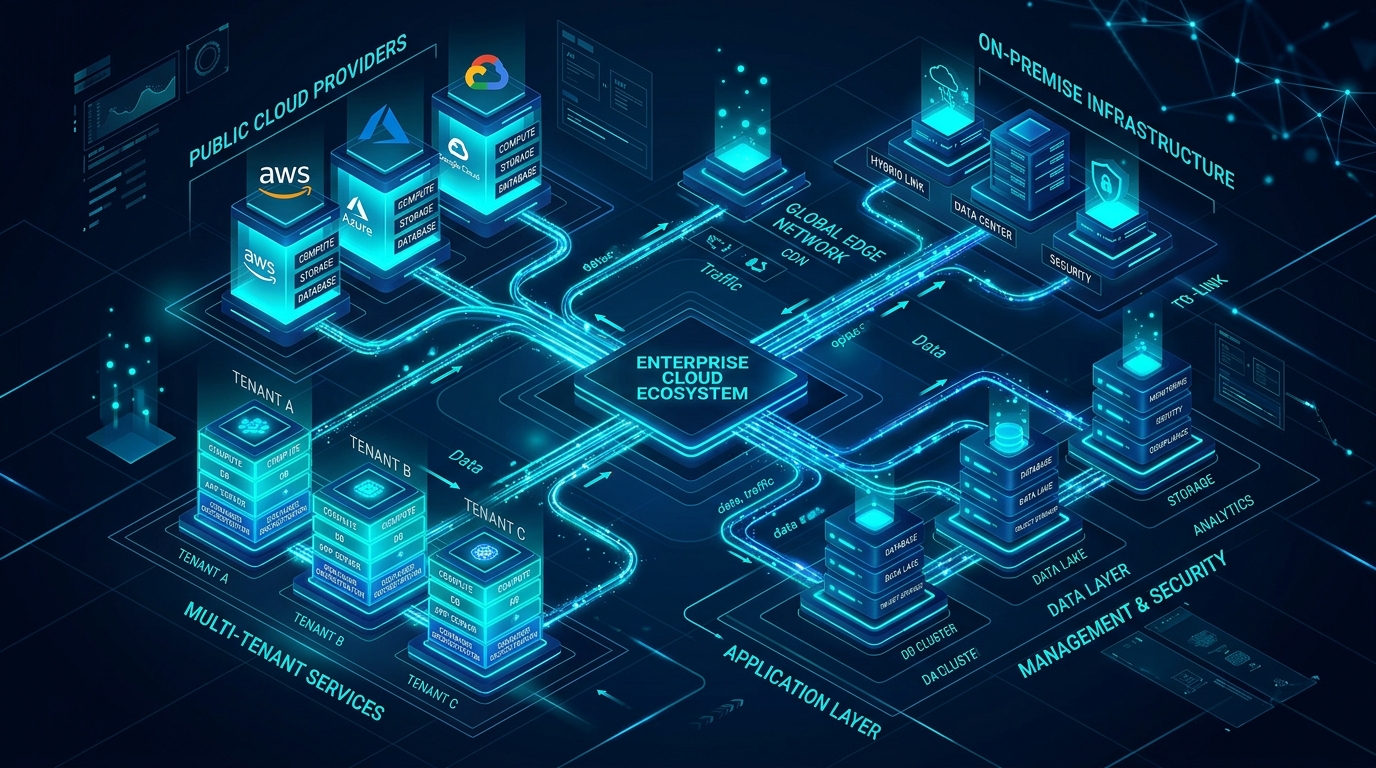
Ingress Traffic -> Edge CDN (Cache Hit: 85% Egress Saved) -> Kubernetes Cluster (VPA Rightsized) -> PgBouncer Pool -> Primary DB (Writes Only) + Read Replicas (Reporting)1. Rightsizing Underutilized Kubernetes Nodes
In the rush to ensure application reliability, software engineers frequently allocate massive safety buffers to containerized microservices—requesting 4 CPU cores and 16GB of RAM for services that average less than 15% utilization during peak traffic. Multiplied across hundreds of pods, cloud bills inflate exponentially.
Cloud FinOps replaces guesswork with empirical telemetry. By deploying Vertical Pod Autoscalers (VPA) and benchmarking P95 resource consumption over 30-day operational cycles, engineering teams can rightsize container definitions and consolidate worker nodes, routinely cutting Kubernetes compute bills by 35% to 50% without risking performance degradation.
2. Connection Pooling and Read Replica Offloading
Managed databases like Amazon RDS or Google Cloud SQL are often the single largest line item on enterprise cloud invoices. When hundreds of application servers open direct connections, memory overhead skyrockets, forcing companies to upgrade to prohibitively expensive high-memory instance tiers.
Implementing dedicated connection poolers like PgBouncer allows thousands of transient microservice requests to share a compact, optimized pool of physical database connections. Furthermore, routing analytics queries and executive dashboard exports to read-only replicas prevents primary database lockups and allows downsizing primary production instances.
3. Egress Traffic Optimization via Regional CDNs
Cloud providers charge punitive rates for outbound data transfer (egress) across availability zones and the public internet. Delivering raw images, CSS, JavaScript bundles, and heavy API JSON responses directly from origin application servers drains budgets.
Positioning global content delivery networks (CDNs) like Cloudflare or Fastly at the edge caches static assets and idempotently cached API responses within milliseconds of global users. This slashes origin server bandwidth by up to 70% while improving page load speeds by 4x worldwide.
4. Building a Culture of Cost Accountability
True infrastructure optimization is an organizational habit, not a one-time audit. Enforcing mandatory cloud tagging (attributing every cluster, disk, and database to specific engineering teams) and scheduling automated Slack alerts for unexpected daily spend anomalies creates transparent cost consciousness across the entire development team.