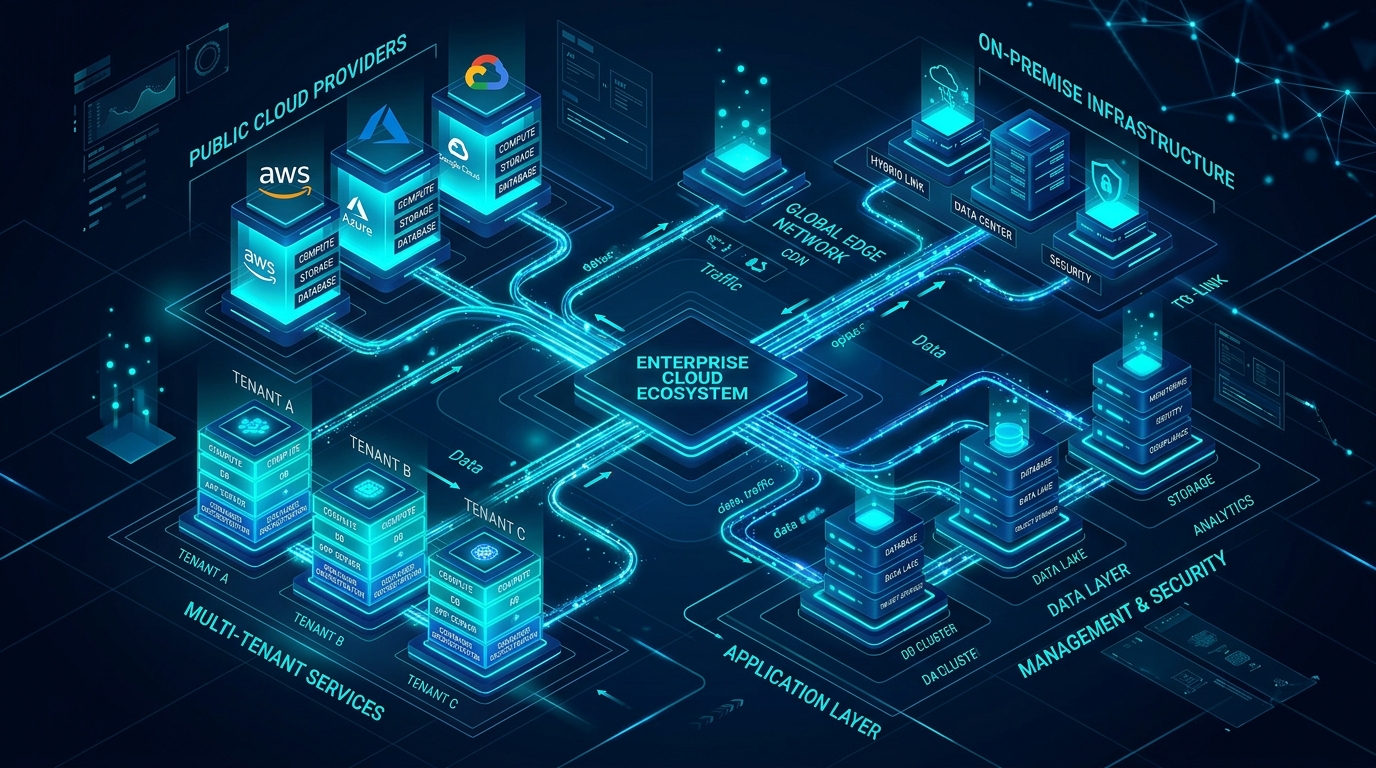
Multi-tenant architecture, explained plainly
An engineering deep dive into building scalable multi-tenant SaaS platforms with shared infrastructure and isolated tenant contexts.
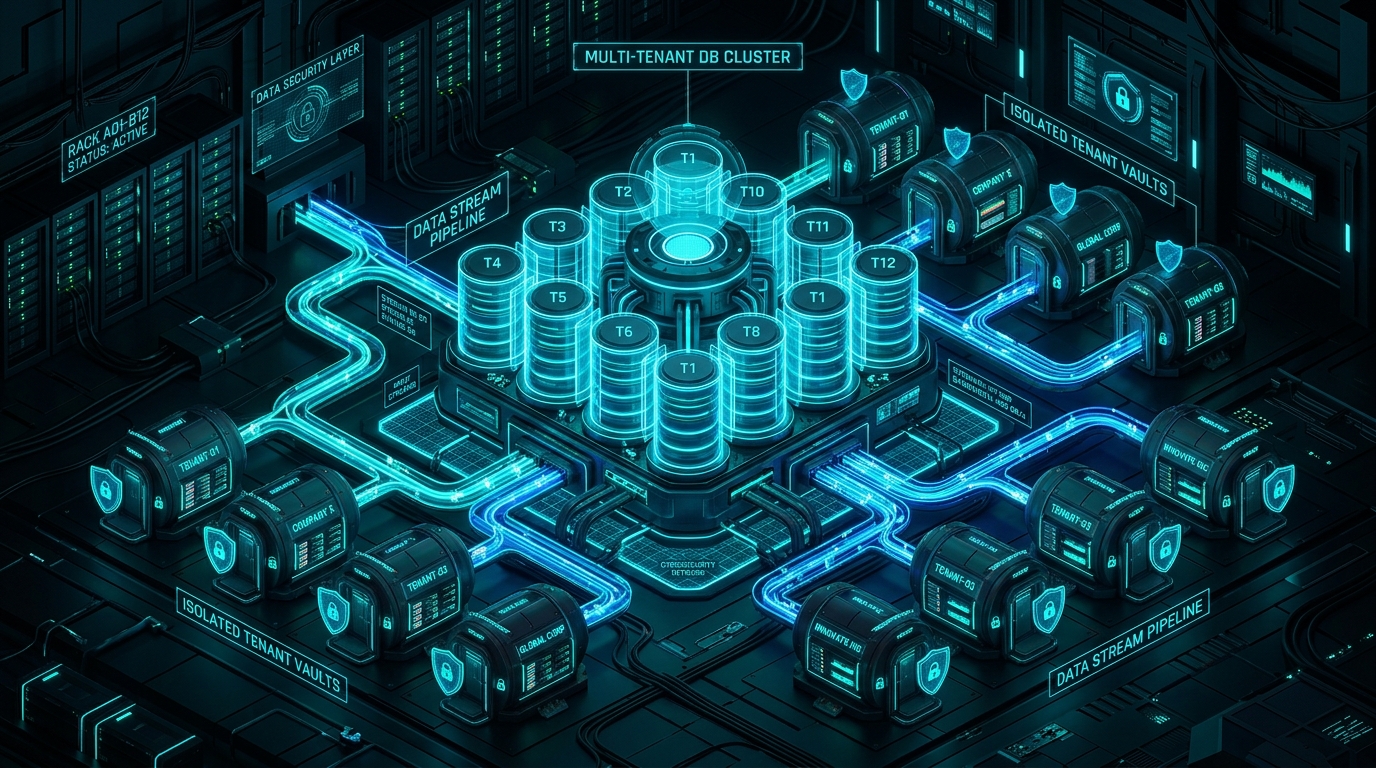
- Understand the trade-offs between pooled databases (RLS), schema-per-tenant, and isolated database clusters.
- Inject tenant context at the API gateway layer using cryptographically signed JWT tokens.
- Implement token-bucket rate limiting per tenant tier to prevent noisy neighbor degradation.
- Automate zero-downtime database schema migrations across thousands of tenant partitions simultaneously.
Inbound Request -> API Gateway (Verify JWT & Extract Tenant ID) -> Connection Pooler (PgBouncer) -> PostgreSQL Cluster [Schema Partition: Tenant_Alpha, Tenant_Beta, Tenant_Gamma]1. Shared Compute vs. Isolated Databases
At its core, multi-tenancy is the architectural art of serving thousands of independent enterprise customers from a unified, efficient cloud infrastructure without allowing any customer to view or tamper with another's data.
Engineers typically choose between three fundamental models: (1) Shared Database with Shared Schema using Row-Level Security (RLS), (2) Shared Database with Isolated Schemas, and (3) Dedicated Databases per Tenant. For high-scale SaaS products like DEZORYN, a hybrid approach provides the sweet spot: standard workspace tiers share robust schema partitions with hardware-accelerated RLS, while enterprise clients receive dedicated sharded database instances.
2. Dynamic Schema Routing and Context Injection
How does a microservice know which customer's data to query? Modern cloud architectures intercept inbound HTTP requests at the edge API gateway, validating the cryptographically signed JWT bearer token and extracting the organizational `tenant_id` claim.
Before executing any SQL query, the database connection pooler injects the active tenant context directly into the database transaction session (e.g. `SET LOCAL app.current_tenant = 'tenant_xyz'`). The PostgreSQL database engine then transparently enforces boundary checks on every SELECT, UPDATE, and DELETE statement at the kernel level, mathematically eliminating cross-tenant data leaks.
3. Noisy Neighbor Protection & Rate Limiting
In a shared infrastructure environment, an aggressive customer running massive data exports or rogue crawler scripts must never degrade the system performance of other organizations.
Modern platforms implement distributed token-bucket rate limiters managed in Redis clusters. By tracking request frequencies, query execution times, and background job queues on a per-tenant basis, high-traffic accounts are gracefully throttled with `429 Too Many Requests` status headers while preserving sub-30ms response times for all other active tenants.
4. Zero-Downtime Tenant Schema Migrations
Updating database schemas across thousands of active corporate tenants is one of the greatest engineering challenges in SaaS development. Traditional migration locks cause widespread downtime.
Employing expanding-and-contracting migration patterns—where new columns and indexes are added additively while maintaining backward compatibility with older application code—allows SaaS engineering teams to ship continuous deployments daily with zero service interruption.